Stained Glass Art Techniques
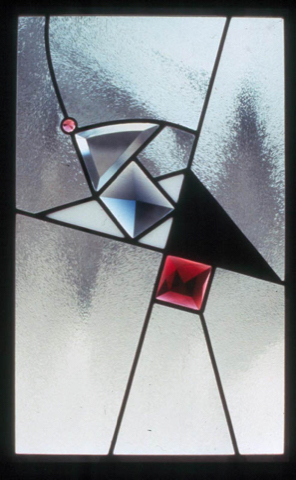
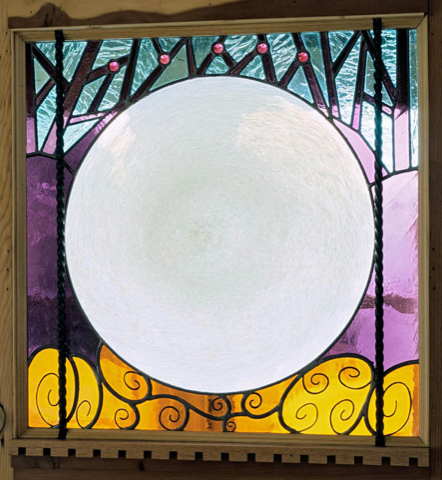
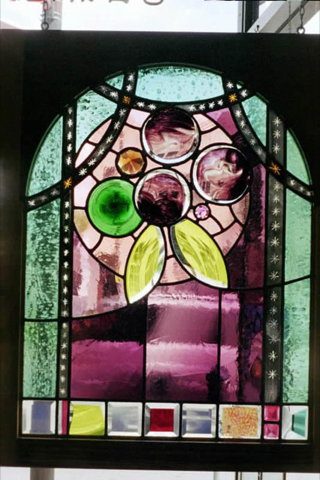
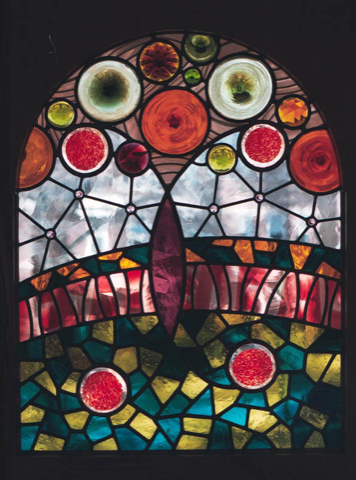
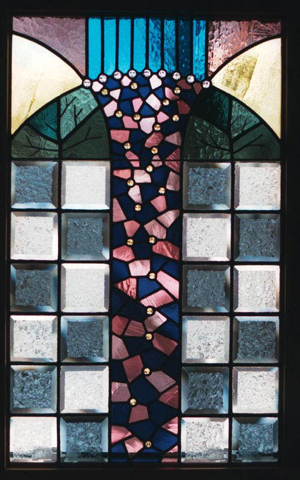
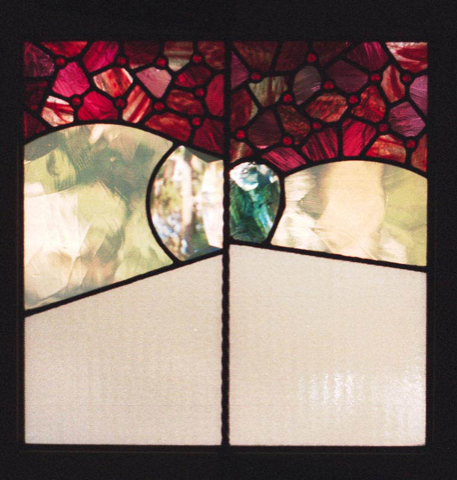
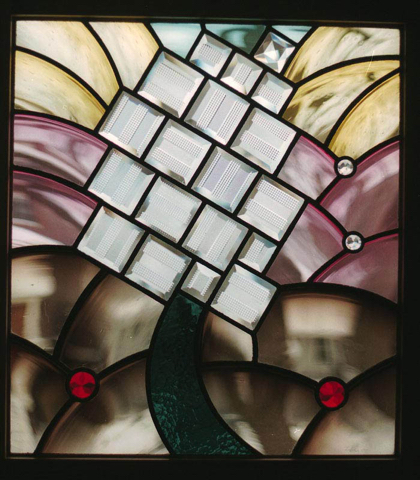
There are many stained glass techniques utilized in the creation of these works that have not been previously mentioned. Some of these are glass painting, rondels, “chunk glass,” cabochons, and tiles.
With painting on glass, the paint is applied with a variety of techniques and usually manipulated before firing. After firing, the paint becomes a permanent part of the glass like the glaze on a piece of pottery. Silver staining is an aspect of painting in which a permanent yellow stain is applied using silver nitrate.
Rondels are glass pieces made by a glassblower spinning small circles, usually 2” to 6” in diameter. They are essentially a small version of crown glass, and can have a dramatic, visually kinetic quality.
“Chunk glass” pieces are many kinds of broken slabs, cullet, or plate in which the fissures of broken glass are evident. Cabochons are small lenses, used like jewels. Tiles can comprise many kinds of pressed or cast glass components.
There are many opportunities to combine techniques and components. Sometimes there is an opportunity to use materials rescued or recycled from the past — an acceptance of their imperfections is a part of the creative process.
“The many components and techniques used in making these works are not as important as the creativity required to compose with them. As in music with millions of possible combinations for tone, cadence, harmony and dissonance, stained glass has line, color, pattern and light. Honest composition, in some way comes from nature. Creating art in sympathy with architecture is a rewarding effort.”